



Shingles
Schedule your Shingles Vaccination
Want more information on Shingrix the shingles vaccine? Click HERE
About Shingles
Key Points
- About 1 in every 3 people in the United States will have shingles (or herpes zoster) in their lifetime.
- Shingles can sometimes lead to serious complications like long-term nerve pain and vision loss.
- The best way to protect yourself from shingles is vaccination.
- The current shingles vaccine, Shingrix, is indicated for patients 50 years and over and adults 18 years and older who are or will be at increased risk of shingles due to being immunocompromised by known disease or therapy. It consists of 2 doses, spaced 2-6 months apart.
-
What is Shingles?
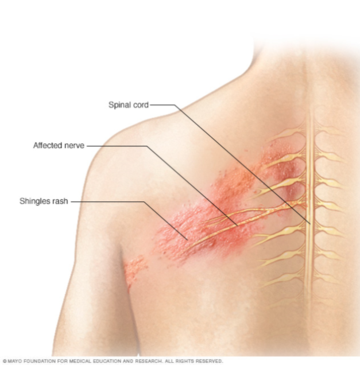
Shingles is a painful rash illness. People get shingles when the varicella-zoster virus (VZV), which causes chickenpox, reactivates in their bodies after they have already had chickenpox.According to the CDC, the infection strikes about 1 million people in the U.S. each year. Most people who develop shingles only have it one time during their life. However, you can have shingles more than once.
-
Who is at risk?
OUR RISK FOR SHINGLES INCREASES AS YOU AGE.
1 OUT OF 3 PEOPLE IN THE US WILL GET SHINGLES.
If you’re one of the approximately 99% of adults born before 1980 who have had chickenpox, the virus that causes shingles is already inside your body. It can reactivate at any time, and your risk increases as your immune system naturally declines with age or disease.
Your risk of shingles and serious complications increases:
- As you get older
- If you have medical conditions that keep your immune systems from working properly such as certain cancers, like leukemia and lymphoma, and HIV infection.
- If you take drugs that keep your immune system from working properly, like steroids and drugs given after an organ transplant.

-
Shingles Symptoms

Shingles typically produce a painful rash that blisters and scabs over in 7 to 10 days, it usually clears up within 2 to 4 weeks. Over 93% of people who get shingles experience acute pain, and many describe the pain as aching, burning, stabbing, or shock-like.
Most commonly, the shingles rash develops as a set of blisters that wraps around either the left or right side of your torso. Sometimes the shingles rash occurs around one eye or on one side of the neck or face.
The signs and symptoms of shingles usually affect only one side of your body. Some people experience shingles pain without ever developing the rash. Some of the signs and symptoms may include:
- Pain, burning, numbness or tingling
- Sensitivity to touch
- A red rash that begins a few days after the pain
- Fluid-filled blisters that break open and crust over
- Itching
Some people also experience:
- Fever
- Headache
- Sensitivity to light
- Fatigue
Contact your doctor promptly if you suspect shingles, especially in the following situations:
- The pain and rash occur near an eye. If left untreated, this infection can lead to permanent eye damage.
- You're 60 or older because age significantly increases your risk of complications.
- You or someone in your family has a weakened immune system (due to cancer, medications or chronic illness).
- The rash is widespread and painful.
-
Prevention - Shingrix Vaccine
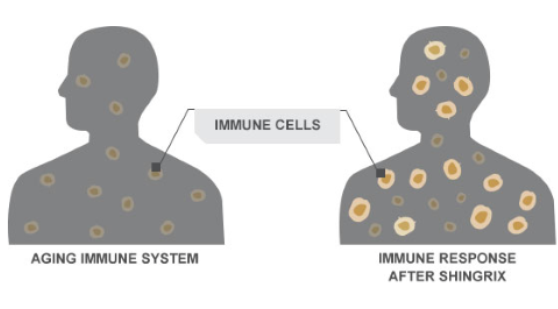
HOW SHINGRIX WORKS
SHINGRIX works to boost your body’s protection against shingles. Your immune system declines as you age, and that puts you at an increased risk for shingles. For those who are 50 years and older, SHINGRIX, helps your immune system defend against shingles regardless of age.
THE IMPORTANCE OF 2 SHOTS
2 TO 6-MONTH INTERVALSHINGRIX is given as a 2-dose series, with the second shot administered 2 to 6 months after the first shot. To ensure you get the protection against shingles offered by SHINGRIX, it's important to get both shots.
-
FAQs
What is Shingles, and how can SHINGRIX help protect against it?
Shingles is an itchy and painful skin rash caused by reactivation of the varicella-zoster virus (the same virus that causes chickenpox). SHINGRIX uses your body’s own immune cells to boost your immune system’s defenses against shingles. It is the only shingles vaccine proven to be up to 90% effective in clinical trials.
I feel healthy; am I really at risk for shingles?
If you’re one of the 99% of adults over 50 years old who have had chickenpox or 18 years and older who have a weakened immune system because of disease or treatment, the virus that causes shingles is inside your body and can reactivate at any time. 1 in every 3 people in the US will get shingles in their lifetime. No matter how healthy you feel, your immune system declines as you age, and that puts you at an increased risk for shingles.
Does my risk of shingles increase as I get older?
Yes, your risk of shingles increases as you get older. 1 out of 3 people in the US will get shingles.
Are shingles contagious?
Shingles are not contagious, but the virus can be spread from a person with active shingles to someone who has never had chickenpox – or was never protected against it. In this case, the person exposed to the virus might develop chickenpox. The virus spreads through direct contact with fluid from the blisters. Once the shingles blisters have developed crusts, they’re no longer contagious.
Is SHINGRIX covered by my insurance?
Most insurance plans cover SHINGRIX if you are over the age of 50 years of age or are 18 years and older who have a weakened immune system because of disease or treatments. Most insurance plans cover the vaccine with $0 copay.
How effective is SHINGRIX?
SHINGRIX is the only shingles vaccine proven to be up to 90% effective in adults 50 years and older in clinical trials.
How many shots of SHINGRIX do I need to receive, and when?
SHINGRIX is given as a 2-dose series, with the second shot administered 2 to 6 months after the first shot. It’s important to receive both shots of SHINGRIX.
How will I feel after each shot?
Pain, redness, and swelling at the injection site, muscle pain, tiredness, headache, shivering, fever, and upset stomach are all common side effects of SHINGRIX.
Can I receive SHINGRIX while pregnant or nursing?
SHINGRIX was not studied in pregnant or nursing women. Tell your healthcare provider if you are pregnant, plan to become pregnant, or are breastfeeding.
WHAT ARE THE POSSIBLE SIDE EFFECTS OF SHINGRIX?
The most common side effects of SHINGRIX are:
- Pain, redness, and swelling at the injection site
- Muscle pain
- Tiredness
- Headache
- Shivering
- Fever
- Upset stomach
Severe allergic reactions are less common and include: hives, swelling of the face/throat, difficulty breathing, a fast heartbeat, dizziness, and weakness. If you experience any of these reactions, seek medical attention immediately.ADDITIONAL IMPORTANT INFORMATION
You should not get SHINGRIX if you are allergic to any of its ingredients or have had an allergic reaction to a previous dose of SHINGRIX. SHINGRIX may not protect all individuals. Ask your healthcare provider about the risks and benefits of SHINGRIX. Only a healthcare provider can decide if SHINGRIX is right for you. To learn more about SHINGRIX, talk to your pharmacist.
IMPORTANT SAFETY INFORMATION
- You should not receive SHINGRIX if you are allergic to any of its ingredients or had an allergic reaction to a previous dose of SHINGRIX
- The most common side effects are pain, redness, and swelling at the injection site, muscle pain, tiredness, headache, shivering, fever, and upset stomach
- SHINGRIX was not studied in pregnant or nursing women. Tell your healthcare provider if you are pregnant, plan to become pregnant, or are breastfeeding
- Vaccination with SHINGRIX may not protect all individuals
- Ask your healthcare provider about the risks and benefits of SHINGRIX. Only a healthcare provider can decide if SHINGRIX is right for you
- 1